CV & Resumes
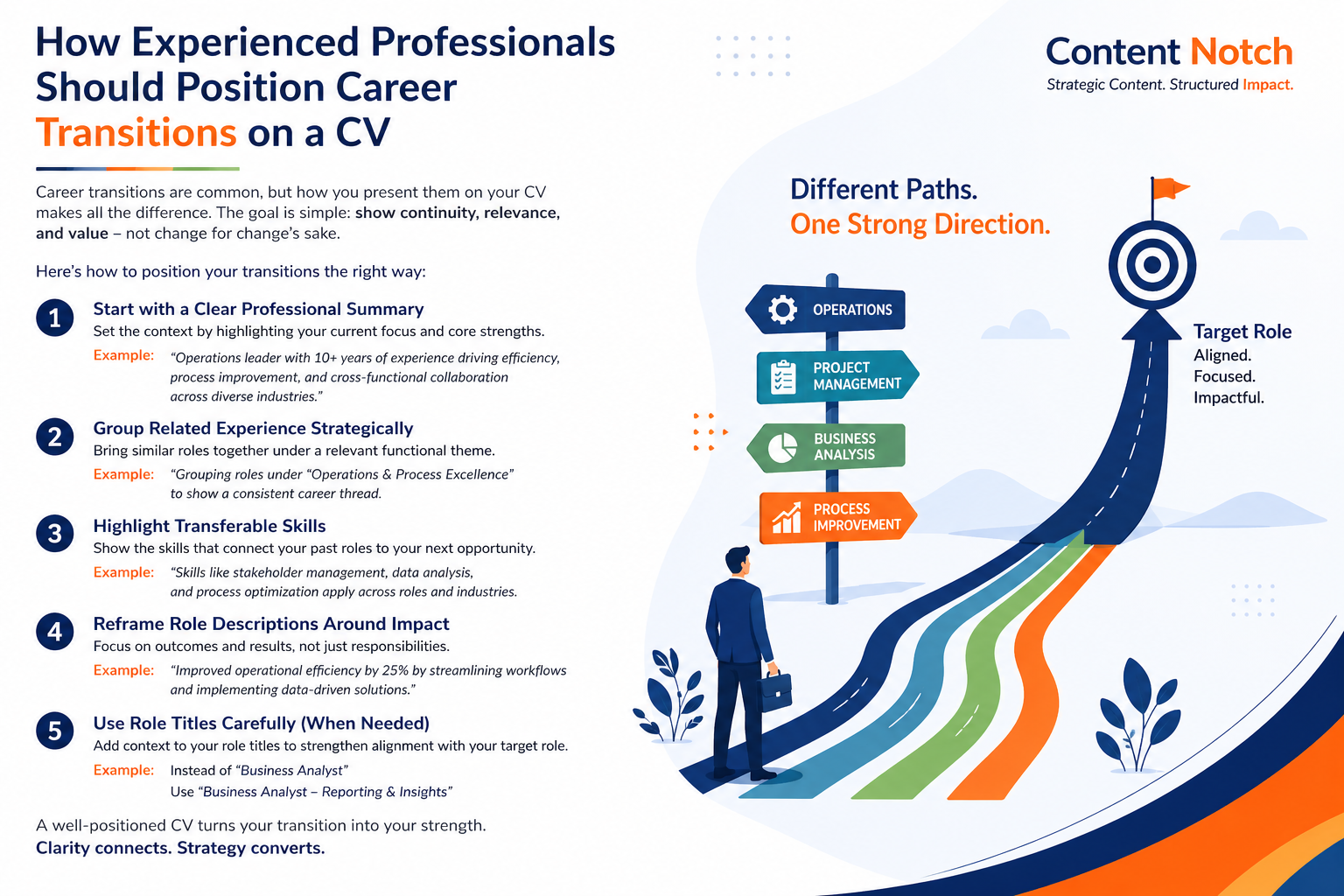
How Experienced Professionals Should Position Career Transitions on a CV
Career transitions are more common than ever.
Professionals today move across roles, industries, and functions as their careers evolve. Yet, when it comes to presenting these transitions on a CV, many struggle to position them clearly.
The challenge is not the transition itself.
It is how the transition is communicated.
Why Career Transitions Often Look Confusing on a CV
Many experienced professionals list their roles exactly as they occurred, assuming the progression will speak for itself.
But for a recruiter to scan your CV, transitions can appear as:
• lack of focus
• inconsistent career direction
• unrelated experience
Without clear positioning, even a well-earned transition can appear to be a gap in clarity.
The Real Objective: Show Continuity, Not Change
The biggest mistake is highlighting the change.
The right approach is to highlight the continuity of skills and value.
Instead of showing:
“I moved from Role A to Role B”
Your CV should communicate:
“These experiences are connected through a consistent skill set and direction.”
How to Structure Career Transitions Effectively
1. Start with a Clear Professional Summary
Your summary should act as a bridge between roles.
It should:
• define your current positioning
• highlight transferable strengths
• align your experience with your target role
This sets context before the recruiter reads further.
2. Group Related Experience Strategically
If your roles are closely connected, consider grouping them under a common functional theme.
This helps reduce the perception of fragmentation and improves readability.
3. Highlight Transferable Skills
Focus on skills that remain consistent across roles, such as:
• stakeholder management
• process improvement
• team coordination
• analytical thinking
These create a thread of continuity in your profile.
4. Reframe Role Descriptions Around Impact
Avoid listing responsibilities in isolation.
Instead, show:
• what you did
• how it contributed
• what changed because of it
This shifts attention from “different roles” to consistent value creation.
5. Use Role Titles Carefully (When Needed)
In some cases, adding context to role titles can help.
For example:
Instead of:
Operations Executive
You may present:
Operations Executive – Process Improvement Focus
This helps align past roles with your current positioning.
What Recruiters Actually Look For
When reviewing career transitions, recruiters try to answer:
• Does this profile have a clear direction?
• Are the skills relevant to the role?
• Is there a logical progression?
If your CV answers these questions quickly, the transition works in your favor.
Common Mistakes to Avoid
• Over-explaining the transition
• Listing unrelated tasks without context
• Ignoring transferable skills
• Using inconsistent role positioning
• Writing from a chronological perspective instead of a strategic one
Final Thought
Career transitions are not a weakness.
When structured correctly, they reflect:
• adaptability
• growth
• diverse experience
The key is not to show what changed,
but to show what remained strong and relevant throughout.
Because a well-positioned CV does not just tell your career story.
It connects it clearly for the reader.