Content Creation
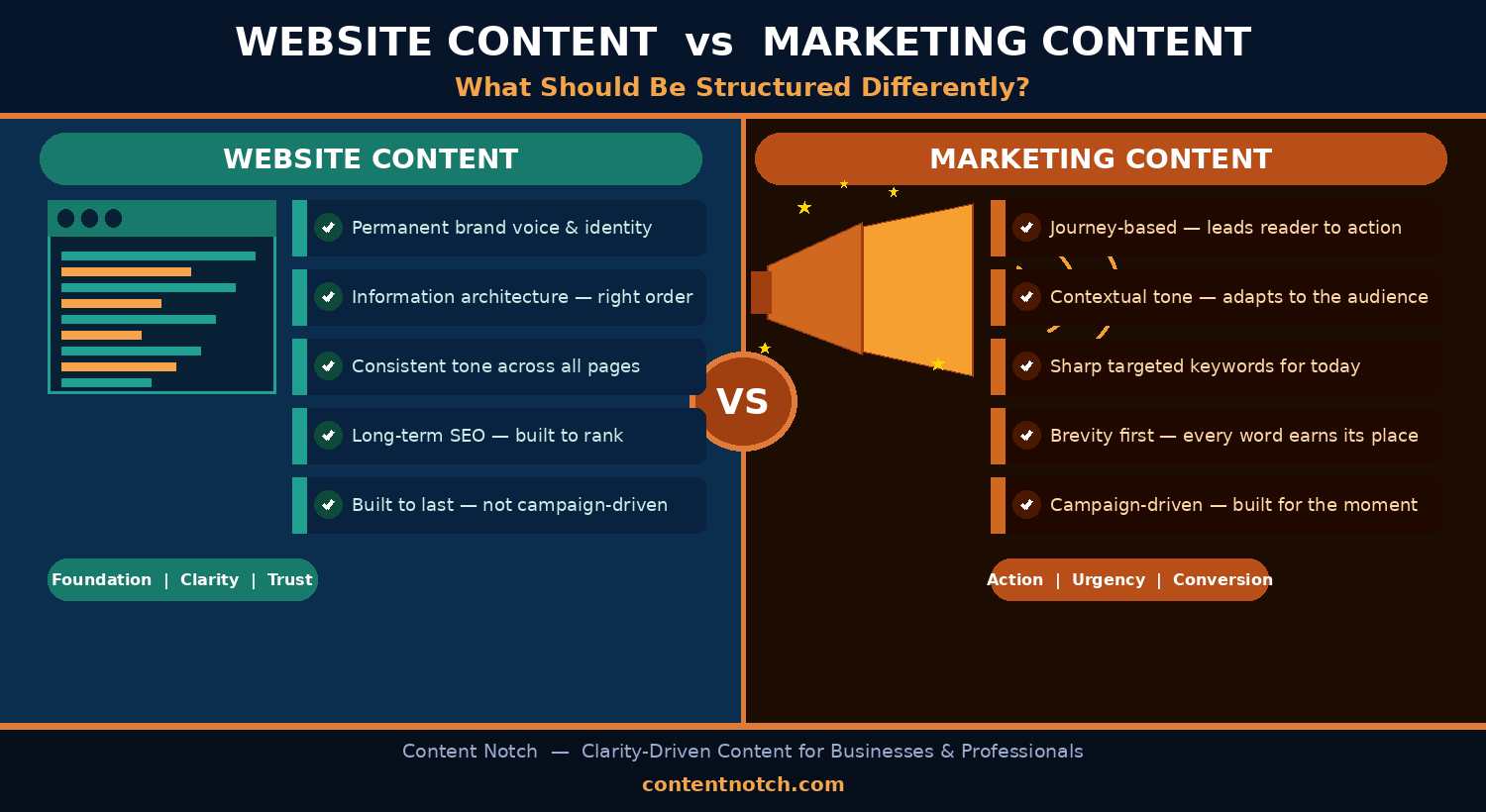
Many businesses treat all content as one category.
A blog, a campaign email, a services page, a LinkedIn post — it all goes into the same bucket labelled "content." The same writer handles it. Sometimes the same brief drives it. And somewhere along the way, the communication starts to feel off — without anyone being able to pinpoint exactly why.
The reason, more often than not, comes down to structure.
Website content and marketing content are two different tools. They serve different purposes, speak to people at different moments, and need to be built differently. When that distinction is missing, even well-written content loses its impact.
Start With What Each One Is Actually Doing
Your website content is your foundation. It is the permanent voice of your brand — who you are, what you offer, who you serve, and why someone should trust you. A first-time visitor should walk away with complete clarity, without needing to read anything else.
Marketing content, on the other hand, is movement. It is designed to create interest, drive a specific action, or connect with an audience at a particular moment. It is time-sensitive, audience-specific, and goal-driven.
Think of it this way — your website is the house. Your marketing content is the open invitation that brings people to the door.
When you write both with the same structure and intent, one of them will always fall short.
Where the Structure Actually Differs
Purpose shapes the format
Website content is built around what the reader needs to know, in the right order, to feel confident about your brand. Every page has a role. The homepage builds trust. The services page creates clarity. The about page builds a connection.
Marketing content is built around momentum. It leads with a hook, builds interest or urgency, and ends with a clear call to action. Completeness matters less than direction.
Tone stays consistent on your website — and flexes in marketing
Your website tone should feel the same across every page. It is the baseline voice of your brand. Whether someone reads your homepage or your FAQ, they should feel the same personality.
Marketing content can adapt. A campaign targeting fresh graduates sounds different from one targeting senior professionals. A festive promotion reads differently from a thought leadership piece. The brand voice stays — but the tone shifts with context and audience.
Keywords serve different timelines
For website content, SEO is a long-term investment. Keywords are embedded naturally, written for someone who might find you six months from now.
For marketing content, keywords are sharper and more specific. You are writing for a search intent that is active today — a trend, a moment, a campaign window.
Length works differently, too
Website pages benefit from depth. Enough content to answer questions, build credibility, and support search rankings. A services page with three lines does not build confidence. A well-structured, detailed page does.
Marketing content thrives on focus. Every sentence should earn its place. If it does not move the reader closer to action, it should not be there.
And shelf life is completely different
Website content is built to last. It should feel relevant months from now, reviewed periodically but not rewritten every week.
Marketing content is often short-lived by design. A campaign runs, delivers its purpose, and closes. That urgency is part of what makes it work.
A Simple Example
Imagine a business offering HR consulting services.
Their website services page clearly explains what HR consulting involves, who it is for, what outcomes clients can expect, and why this team is the right choice. It is thorough, structured, and built for trust.
Their LinkedIn campaign reads differently: "Is your team growing faster than your HR processes? Let us help you build the structure before the chaos does." Direct, fast, built to get a click.
Same business. Same service. Completely different structure — and that is exactly the point.
Why Getting This Right Matters
When website content is written like a marketing campaign, it feels pushy and incomplete. When marketing content is written like a website page, it loses the reader before it ever reaches the call to action.
Clarity is not just about choosing the right words. It is about understanding the role each piece of content plays — and building it accordingly.
That is what separates content that simply exists from content that actually works.
A Final Thought
Before writing any piece of content, one question is worth asking first.
What is this content meant to do?
The answer to that question should shape everything — the structure, the tone, the length, and the intent behind every word.
Because when content knows its purpose, it communicates with a lot more clarity.